

A typical barrel used for whiskey production is seasoned for around four to six months before it’s kiln-dried for up to a few weeks. Longer seasoning requires much more time as the staves get exposure to the elements (rain, sun, wind) to leach out harsh tannins and bitter compounds. The longer the staves are seasoned, the more the wood compounds are broken down (lignin and hemicellulose), which equals more flavor absorbed into the distillate. According to a study done by Independent Stave Company , whiskey distillate aged in an 18-month seasoned barrel gets a 32% boost over a 6-month seasoned barrel in overall flavor concentration in the first year. “To put that in perspective, that is the equivalent to approximately 12 to 18 months of additional aging time in a young whiskey. Couple the flavor boost with the ability of seasoning to reduce the amount of tannin within each stave, and you have a flavor lever that will benefit just about any application for any spirit. Good for longer aged spirits due to the reduced levels of tannin; good for younger spirits due to the 32% increase in flavor concentration within the first year.”
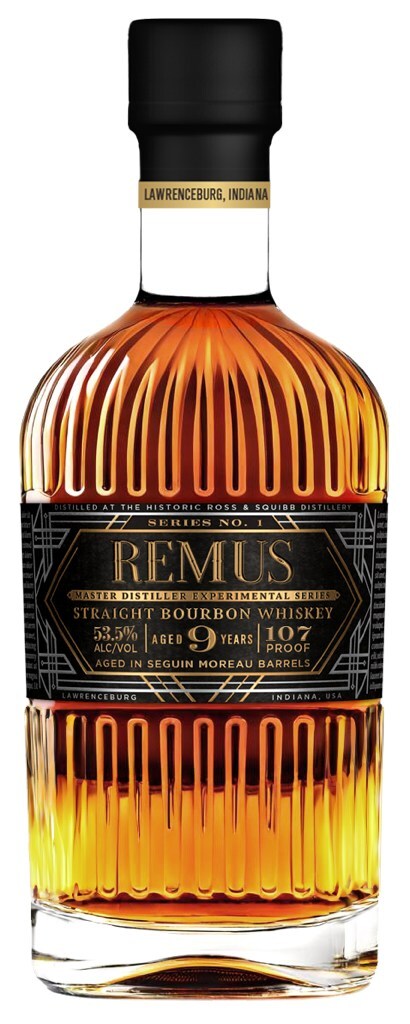 Taken: Neat in a Glencairn glass, rested for about 15 minutes.
Distillery: Ross & Squibb Distillery, Lawrenceburg, Indiana.
Proof: 107.
Age: 9 years.
Series No. 1: Aged in new Sequin Moreau Barrels, 53 Gallons, American oak.
Mash bill: 60% Corn/36% Rye/4% Malted Barley.
Retail Price: $79.99, 700ml.
Appearance: Dark copper.
Nose
The nose leads with dark brown sugar, dark chocolate, orange citrus, figs, root beer, vanilla beans, dill, black tea, floral, allspice, cedar. As the session continues, flavors of maple syrup, toasted hazelnuts, waffle cone, stone fruit, and wood smoke develop.
Palate
The nose matches the palate with its barrel-influenced flavors of dark brown sugar, dark chocolate, toffee, coffee beans, with orange peel, fig newton, black tea, vanilla bean, toasted oak, and allspice. The mouthfeel is very creamy, with not much proof heat.
Finish
Allspice lingers with chocolate, hazelnuts, vanilla, toasted oak, soft leather, and pipe tobacco. There’s a long finish that closes out with toasted oak, root beer, wood smoke, chocolate, and pipe tobacco.
Conclusion
This release is the perfect example of how vastly different barrel specifications can take a well-known bourbon profile and change it into something new. When I think of medium to large whiskey brands that use 18-month (or longer) seasoned barrels, Woodinville and Michter’s come to mind, both of which mention the use of well-seasoned barrels as a feature of their brand. But premium barrels come with added costs, which is why I’m guessing that they’re the exception rather than the rule. Chris Riesbeck of Found North says the 18 and 24-month seasoned, air-dried barrels they use cost them $50 and $175 more each than kiln-dried barrels. So, who’s buying them, and what are some examples for these more expensive, premium, well-seasoned barrels? Besides the Michter’s of the whiskey world, from what I’ve seen, I’d say small craft to mid-size brands (like Woodinville), limited-time offerings, premium blenders (like Found North) who are using them for additional long-term racking, and premium non-distilling producers.
I love the profile of this limited Remus release that leans heavily on its oaked-influenced flavors of dark brown sugar, chocolate, and toffee. There’s not much in the way of orchard or stone fruit flavors; instead, the oak is balanced with fig, orange peel, vanilla bean, and black tea with an underlying subtle wood smoke note that adds a unique bit of character. It would be great to see Ross & Squibb re-create something like this as a limited-time offering in the future. Another thing worth mentioning is that I was surprised by the price. Being a limited one-time release, I was expecting this to retail for more than $80. The limitation is that the Master Distiller Experimental Series No. 1 is only available in AZ, CA, CT, KS, MA, MD, MO, NY, OH, TX, UT, WA, and WI, but I’ve seen it in other states. If Master Distiller Experimental Series No. 1 sounds good to you, I’d recommend trying it if you can find it.
Rating: 8/10.
The sample used for this review was provided courtesy of Ross & Squibb at no cost and without any stipulations. The opinions of this review are my own.
1 | Disgusting | So bad I poured it out.
2 | Poor | I wouldn’t consume by choice.
3 | Bad | Multiple flaws.
4 | Sub-par | Not bad, but better exists.
5 | Good | Good, just fine.
6 | Very Good | A cut above.
7 | Great | Well above average.
8 | Excellent | Really quite exceptional.
9 | Incredible | An all-time favorite.
10 | Perfect | Perfect.


